-
Del00-Start
-
Del01 - Planternes betydning
-
- Deltag i dette kurset at få adgang til ressourcer
-
Del02-Navngivning af planter
-
- Deltag i dette kurset at få adgang til ressourcer
-
- Deltag i dette kurset at få adgang til ressourcer
-
Part03-Planters behov og trusler
-
- Deltag i dette kurset at få adgang til ressourcer
-
Del04-Pruning
-
- Deltag i dette kurset at få adgang til ressourcer
-
- Deltag i dette kurset at få adgang til ressourcer
-
Del05-Ergonomi
-
- Deltag i dette kurset at få adgang til ressourcer
-
Del06-Kommunikation og adfærd
-
- Deltag i dette kurset at få adgang til ressourcer
-
Part07-Kundeservice
-
- Deltag i dette kurset at få adgang til ressourcer
-
Del08-Planlægning af dit arbejde
-
- Deltag i dette kurset at få adgang til ressourcer
-
Del09 - Viden om planter
-
Del10-Anlæggets struktur
-
- Deltag i dette kurset at få adgang til ressourcer
-
Del11-Plantens fysiologi
-
- Deltag i dette kurset at få adgang til ressourcer
-
Del12-Groth Medium
-
- Deltag i dette kurset at få adgang til ressourcer
-
Del13-Vand
-
- Deltag i dette kurset at få adgang til ressourcer
-
- Deltag i dette kurset at få adgang til ressourcer
-
Del14-Gødning
-
- Deltag i dette kurset at få adgang til ressourcer
-
- Deltag i dette kurset at få adgang til ressourcer
-
Del 15 - Lys
-
- Deltag i dette kurset at få adgang til ressourcer
-
- Deltag i dette kurset at få adgang til ressourcer
-
Del16-Vanding af potter og planter
-
- Deltag i dette kurset at få adgang til ressourcer
-
Del 17 - Skadedyrsbekæmpelse
-
- Deltag i dette kurset at få adgang til ressourcer
- Quiz
-
- Deltag i dette kurset at få adgang til ressourcer
- Quiz
-
- Deltag i dette kurset at få adgang til ressourcer
- Quiz
-
- Deltag i dette kurset at få adgang til ressourcer
- Quiz
-
- Deltag i dette kurset at få adgang til ressourcer
- Quiz
-
- Deltag i dette kurset at få adgang til ressourcer
-
Del18-Grønne vægge
-
Del 19 - Afsluttende eksamen
Family: Arecaceae
Common Names: Fishtail palm, Clustering fishtail palm
Previous Names: (Not applicable)
Caryota mitis
Introduction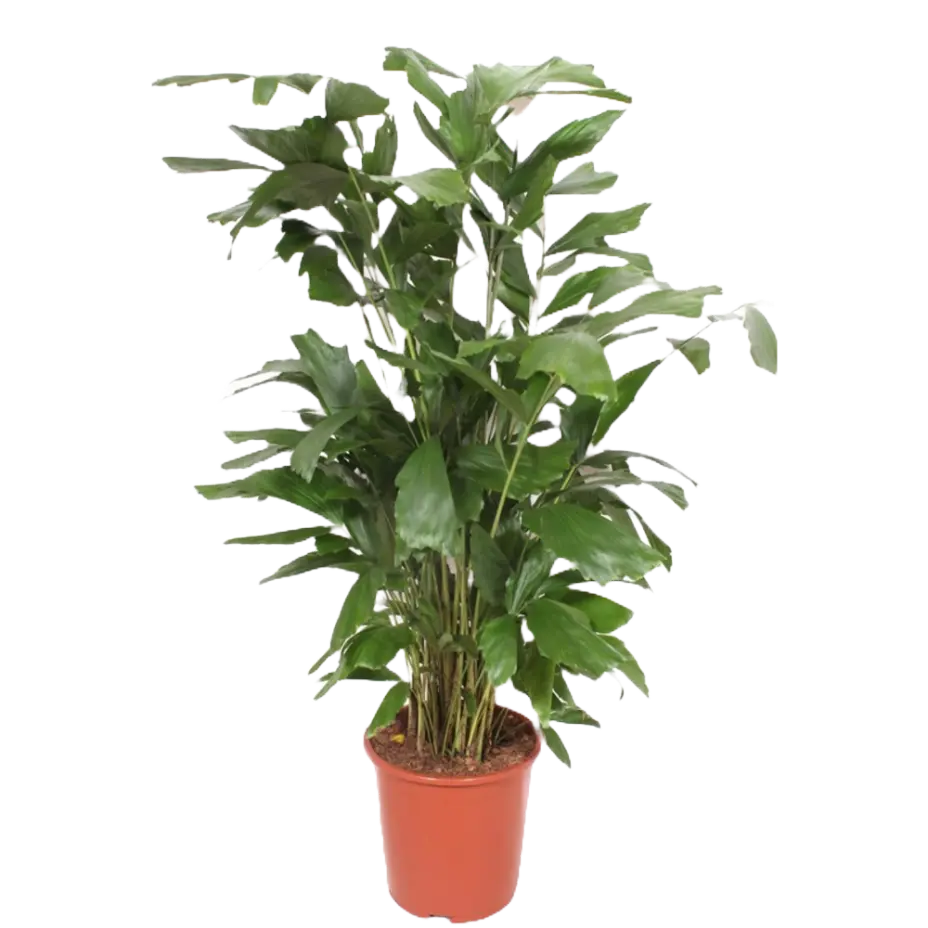
Caryota is a palm genus from Southeast Asia and northern Australia. It is unique among commonly used interior palms because the fronds are doubly divided (bipinnate) and the leaflet veins are fan-like, not parallel. This creates the characteristic “fishtail” look.
A second key trait is how it flowers: flowering begins among the highest leaves and then continues progressively lower along the stem until it reaches the base. After that, the entire stem dies.
Caryota mitis is the interior-friendly choice because it is clustering (multi-stem). When one stem eventually declines after flowering, the clump remains presentable because new shoots replace the old stem.
Technician-critical biology: Each cane (stem) is monocarpic—it can flower once and then die—while the clump continues by producing new canes. Flowering indoors is uncommon, but if one cane declines “for no reason,” this can be the explanation.
🌱 Cultivation
Caryota mitis forms a dense clump and produces new shoots from the base. Maximum height outdoors and indoors is roughly up to 8 meters, but in interiors the key factor is width: under good conditions it can become significantly broader over time.
💡 Visual note: Smaller plants (under ~2 meters) can look thin, while larger specimens look much fuller and more premium.
🪴 Usage
- Large specimens (over ~3 meters) are excellent as solitary statement plants.
- Smaller plants are best used to create a tropical impression in mixed plantings.
Because of the frond structure, it reads as a strong architectural plant even in modern interiors—provided it has room.
📍 Placement
Caryota mitis has similar light requirements to Howea: low to moderate light. In Northern European interiors, this translates to:
- Minimum: ~1000 lux (maintenance/survival)
- Preferred: ~1500–2500 lux at canopy level (better density and color)
Avoid harsh direct sun through glass and avoid cold drafts near entrances or winter-cold window zones.
🛠️ Care
⚠️ Root ball rule (important for service technicians): Imported plants often come with a hard clay root ball that must never dry out. Do not wait too long between waterings. If the clay dries completely, it becomes difficult to re-wet and the plant declines.
At the same time, the root system is very sensitive and must not be damaged. Handle root balls carefully during moves and repotting.
Water management should aim for one thing: steady moisture without waterlogging.
✅ Practical guidance for Northern Europe:
- Keep the root zone evenly moist.
- Reduce watering during the darkest season, but do not allow the root ball to dry out.
- Ensure good drainage so the plant is not sitting in water.
✂️ Leaf repair: Thanks to the fishtail leaflet shape, you can remove individual damaged leaflets without the plant looking “trimmed.”
🐛 Pest & issues
- Spider mites and thrips can occur, but minor attacks are often not very visible.
- If leaf color turns light green, the plant is either too bright or the substrate pH is too high.
🧰 Technician workflow tip: When color fades, check lux at canopy level and confirm the substrate is not drifting alkaline (especially in long-standing indoor planters).
🧰 Technician workflow tip: When troubleshooting, check in this order: light (lux) → moisture pattern → drafts/vent air → pests. Caryota often looks like a watering issue, but the real trigger is frequently winter light deficiency combined with “normal summer watering.”